How Robotics Is Used in Healthcare: Medical Robots Transforming Patient Recovery
When we step inside a modern hospital, we notice the familiar rhythm of healthcare. Doctors move between patient rooms. Nurses monitor vital signs. Therapists guide patients through rehabilitation exercises.
When we step inside a modern hospital, we notice the familiar rhythm of healthcare. Doctors move between patient rooms. Nurses monitor vital signs. Therapists guide patients through rehabilitation exercises.
But something else has quietly become part of this environment.
Machines.
Not machines that replace caregivers, but machines that assist them. Today, medical robots are helping clinicians deliver more precise treatments, support rehabilitation, and improve patient outcomes.
One of the most powerful examples of this transformation is robotic walking therapy for paraplegic patients, where robotics supports patients learning to walk again.
This article explores how robotics is used in healthcare, how medical robots assist rehabilitation, and why robotic therapy is becoming an important part of modern medicine.
What Is a Medical Robot in Healthcare?
A medical robot is a robotic system designed to assist healthcare professionals in diagnosis, treatment, surgery, or rehabilitation.
These machines enhance precision, improve treatment consistency, and reduce physical strain on healthcare providers.
Medical robots are now used across multiple areas of healthcare, including:
- Robotic surgical systems supporting complex operations
- Rehabilitation robots assisting physical therapy
- Robotic imaging tools improving diagnostics
- Intelligent monitoring systems tracking patient recovery
Instead of replacing doctors or therapists, the medical robot extends human capability. It allows clinicians to perform delicate procedures and helps therapists deliver structured therapy.
Why Are Robots Used in Healthcare?
Robotics is being introduced into healthcare because many medical tasks require precision, repetition, and endurance.
Robotic systems help address these challenges while improving patient safety.
Key benefits of medical robots include:
- Improved precision during medical procedures
- Consistent rehabilitation exercises
- Reduced physical strain on healthcare professionals
- Data driven monitoring of recovery
- Safer therapy environments for patients
Because of these advantages, healthcare robotics is expanding rapidly in hospitals and rehabilitation centers.
A Different Kind of Therapy Room
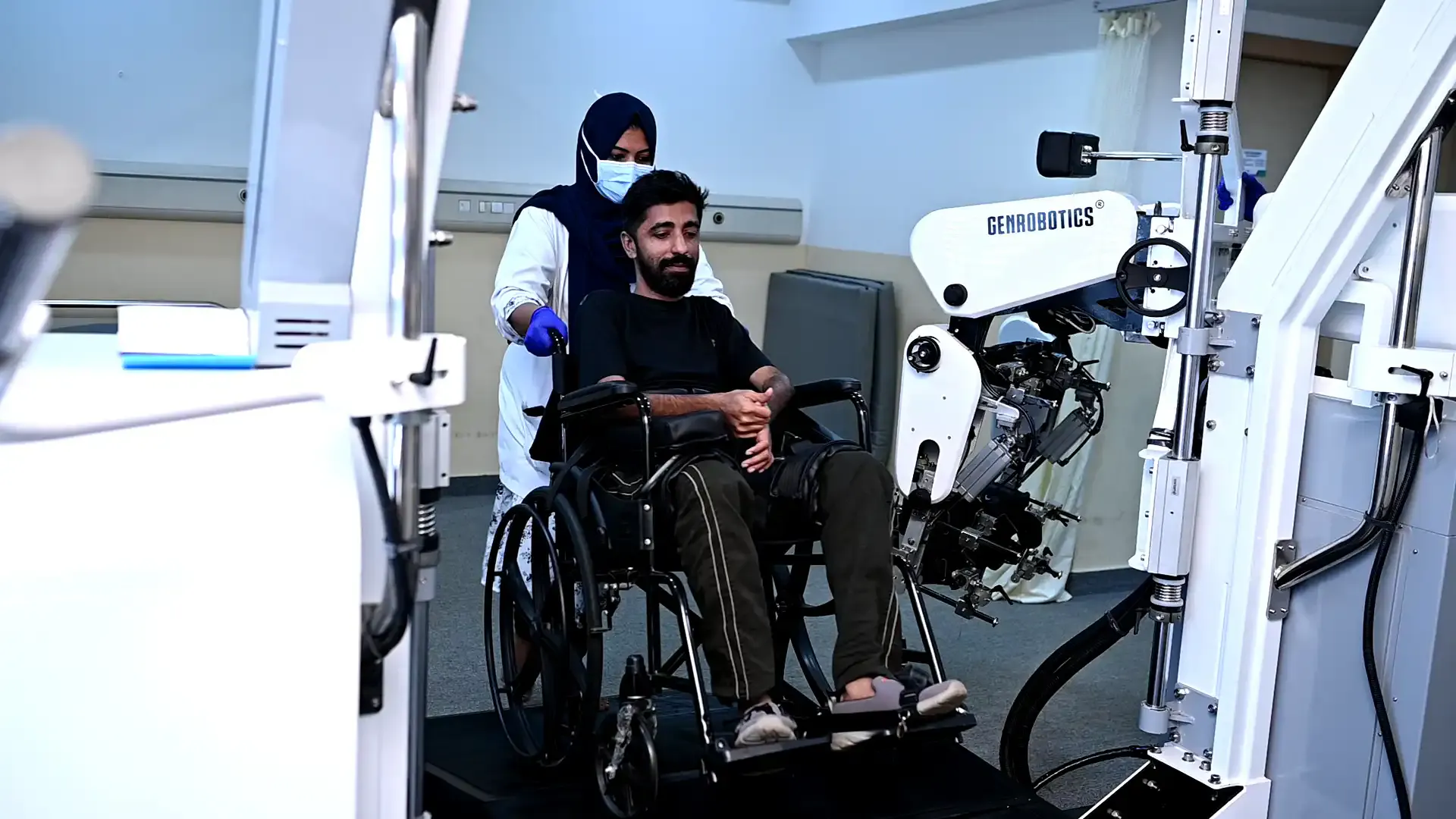
Some of the most meaningful applications of robotics in healthcare appear inside rehabilitation centers.
Here, patients are often working to regain abilities lost due to injuries or neurological conditions.
We frequently encounter people learning to walk again:
- A patient recovering from spinal cord injury
- A stroke survivor rebuilding balance
- A paraplegic patient hoping to regain mobility
Rehabilitation therapy requires patience, careful supervision, and repeated movement exercises.
For therapists, guiding patients through these repetitive movements can be physically demanding.
This is where a new character enters the therapy room.
A robotic rehabilitation system designed to assist walking.
What Is Robotic Walking Therapy for Paraplegic Patients?
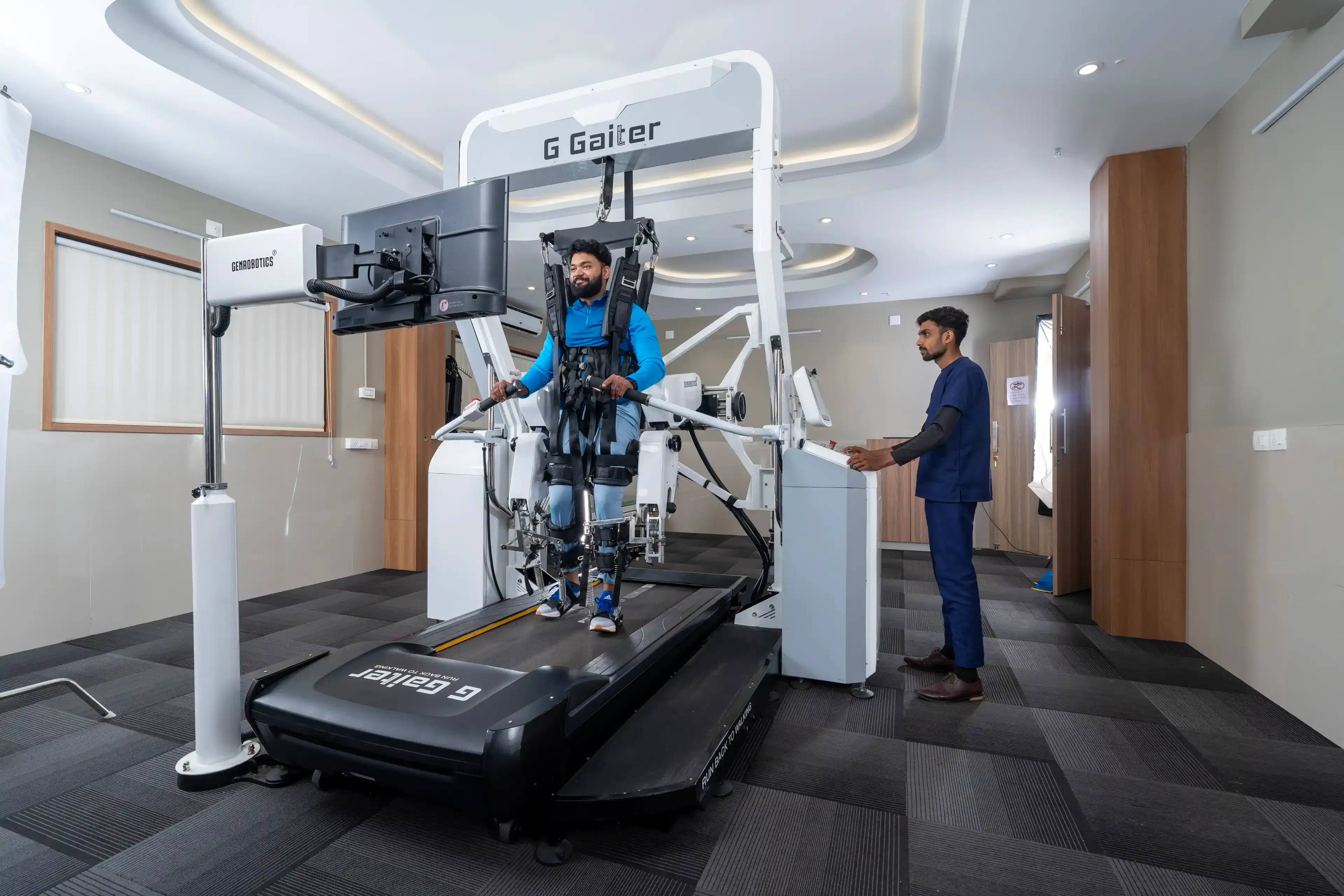
Robotic walking therapy for paraplegic patients is a rehabilitation technique that uses robotic systems to assist controlled walking movements.
Paraplegia often occurs after spinal cord injuries that affect lower body mobility. Traditional rehabilitation focuses on strengthening muscles and retraining movement patterns.
Robotic systems introduce two critical elements.
Precision and repetition.
During robotic walking therapy:
- The patient is supported by a robotic device that assists leg movement.
- The robot guides the legs through natural walking patterns.
- Therapists monitor the therapy session and adjust support levels.
This allows patients to practice walking movements even when they cannot fully support their body weight.
Benefits of robotic walking therapy include
- Controlled walking motion that mimics natural gait
- Adjustable assistance depending on patient strength
- Consistent therapy repetitions
- Reduced physical strain on therapists
For many patients, this technology provides new possibilities for recovery.
How Does a Medical Robot Assist Rehabilitation?
Rehabilitation robots combine several technologies that work together to support therapy.
These systems are designed to ensure safety, precision, and adaptability during treatment.
Motion Sensors
Sensors track patient movement and measure balance, walking speed, and range of motion.
Robotic Actuation Systems
Mechanical components guide the patient’s limbs through controlled and repeatable movements.
Real Time Feedback Systems
Visual and digital feedback helps therapists observe therapy progress and adjust exercises.
Data Monitoring Platforms
Robots collect detailed data from each session so clinicians can analyze improvement over time.
Together, these technologies turn rehabilitation therapy into a structured and measurable process.
Why Is Repetition Important in Rehabilitation?
Neurological recovery depends heavily on repetition.
When someone experiences a spinal cord injury or stroke, the brain must rebuild communication pathways with the body.
Repeated movement helps retrain these pathways.
However, maintaining consistent repetition during therapy sessions can be difficult.
During robotic walking therapy for paraplegic patients, robotic systems can track:
- Walking symmetry and balance
- Range of motion in the legs
- Therapy duration and intensity
- Changes in muscle strength over time
This data allows therapists to adjust treatment programs based on real progress rather than estimates.
Data driven therapy leads to more personalized rehabilitation.
Humans and Medical Robots Working Together
A common misconception about healthcare robotics is that robots will replace healthcare professionals.
In reality, robotics strengthens the role of doctors and therapists.
A medical robot cannot diagnose conditions or determine treatment plans.
Those responsibilities remain entirely human.
Instead, robotic systems assist clinicians by handling repetitive and physically demanding tasks.
This collaboration allows healthcare professionals to focus more on patient care and clinical decisions.
Robotics supports healthcare. It does not replace it.
The Future of Robotics in Healthcare
Healthcare robotics continues to evolve rapidly.
Researchers are developing new technologies that will expand how medical robots assist treatment.
Future innovations may include:
- Adaptive rehabilitation robots that adjust therapy automatically
- Artificial intelligence analyzing patient recovery patterns
- Remote robotic rehabilitation systems for home based therapy
- Advanced mobility robots supporting complex movement training
These technologies will allow healthcare providers to deliver more accessible and effective rehabilitation.
Conclusion
Robotics is transforming how healthcare professionals deliver treatment and rehabilitation.
Through technologies like the medical robot, clinicians can provide more precise care, structured therapy, and better monitoring of patient recovery.
Innovations such as robotic walking therapy for paraplegic patients demonstrate how robotics can support mobility recovery and help patients regain independence.
The future of healthcare will not replace human caregivers with machines.
Instead, it will combine human expertise with robotic precision to deliver better outcomes for patients.
FAQ
What is a medical robot in healthcare?
A medical robot is a robotic system designed to assist healthcare professionals with procedures, rehabilitation, diagnostics, or patient monitoring.
How is robotics used in rehabilitation therapy?
Robotics assists rehabilitation by guiding controlled movements, supporting body weight, and enabling consistent therapy sessions for patients recovering from injuries.
What is robotic walking therapy for paraplegic patients?
Robotic walking therapy is a rehabilitation method where robotic devices assist paraplegic patients in performing controlled walking movements to support mobility recovery.
Can medical robots replace doctors or therapists?
No. Medical robots assist healthcare professionals but do not replace them. Doctors and therapists remain responsible for diagnosis and treatment decisions.
Why is robotics important for modern healthcare?
Robotics improves precision, consistency, and safety in healthcare while enabling data driven treatment and more effective rehabilitation therapy.