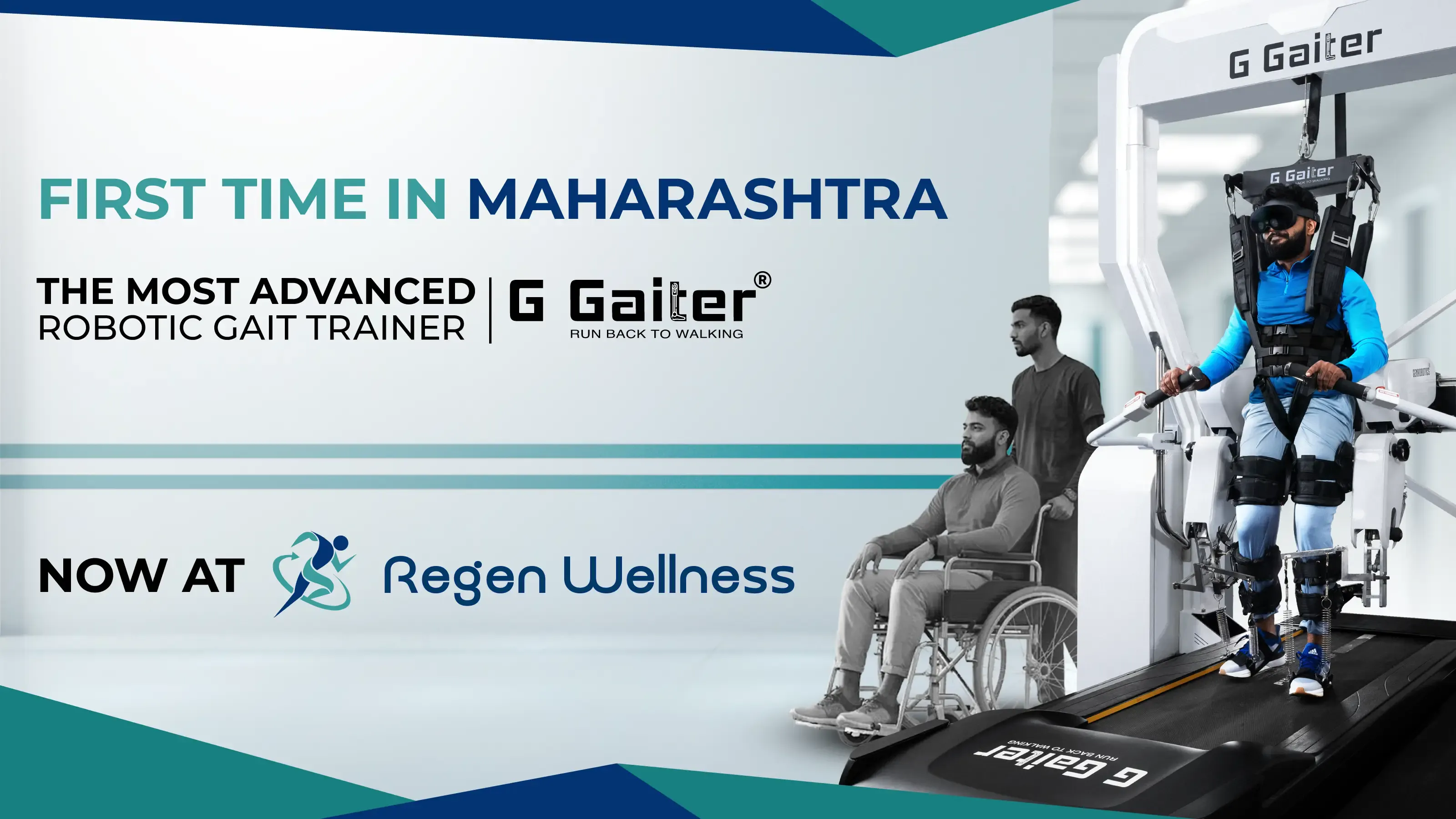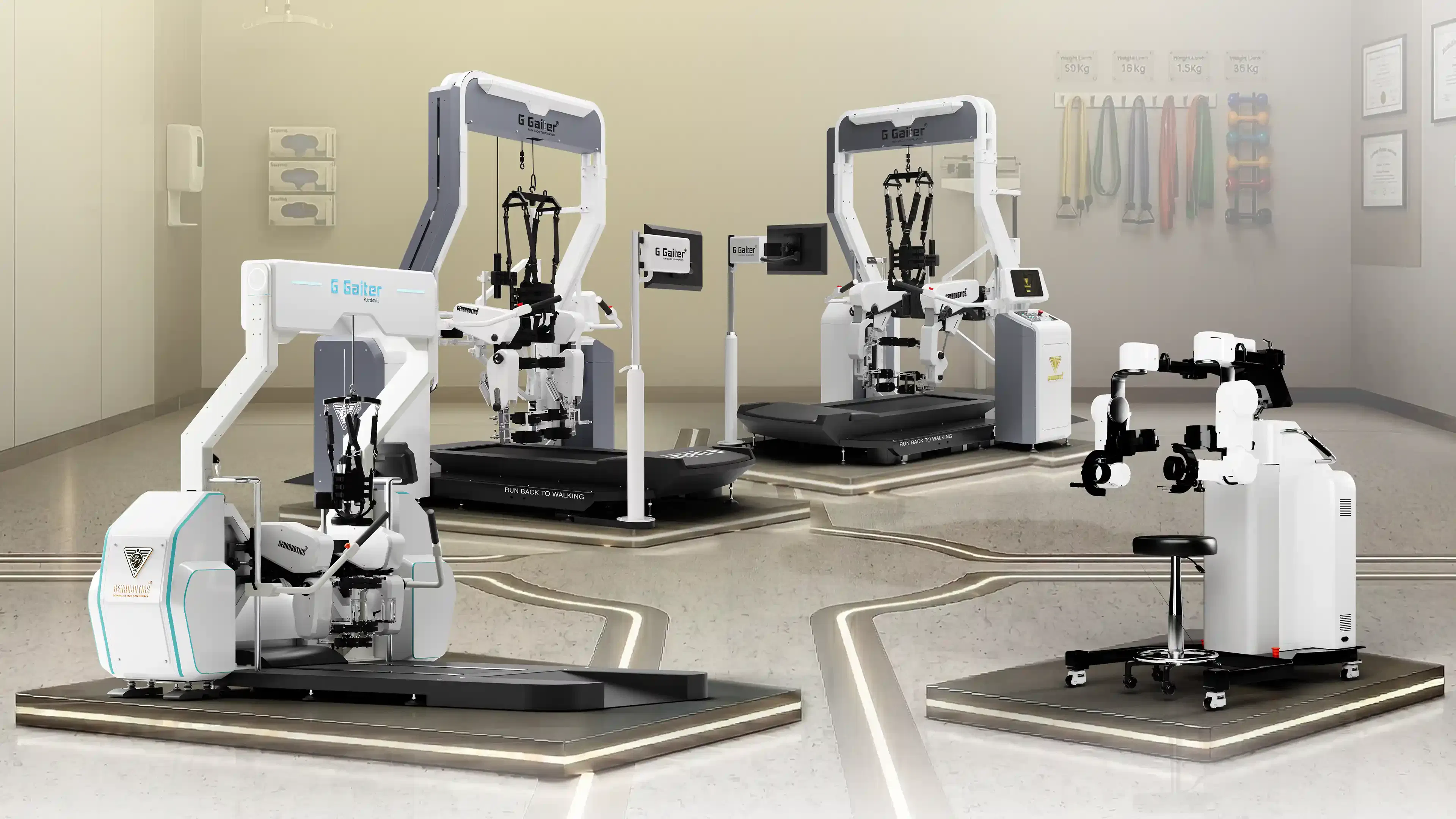
Can Robotic Rehabilitation Redefine Healthcare Equity in India?
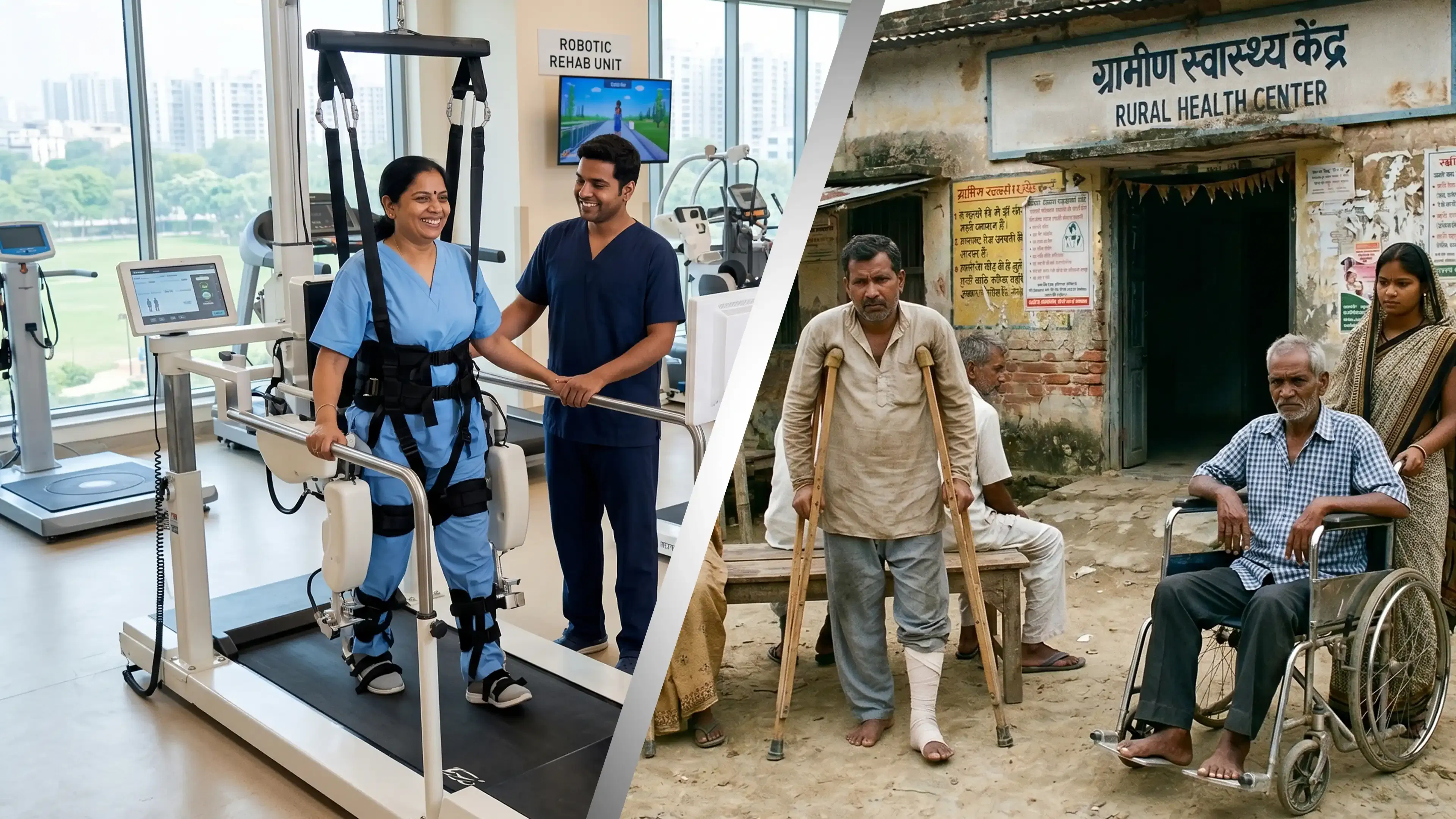
A stroke patient in a Tier-3 town slowly loses mobility because rehabilitation services are unavailable within reachable distance. A spinal injury survivor in a rural district abandons therapy midway because repeated travel to urban hospitals becomes financially impossible. An elderly patient recovering from neurological degeneration receives inconsistent physiotherapy simply because trained specialists are overstretched across public healthcare systems.
Not in crowded emergency wards or high-profile disease outbreaks, but in the long and difficult months that follow survival itself.
A stroke patient in a Tier-3 town slowly loses mobility because rehabilitation services are unavailable within reachable distance. A spinal injury survivor in a rural district abandons therapy midway because repeated travel to urban hospitals becomes financially impossible. An elderly patient recovering from neurological degeneration receives inconsistent physiotherapy simply because trained specialists are overstretched across public healthcare systems.
For millions of Indians, recovery is not determined only by medical diagnosis. It is shaped by geography, affordability, infrastructure, and access.
This is where the conversation around robotic rehabilitation becomes far more important than a discussion about machines in hospitals.
A silent crisis unfolds every day across India’s healthcare system.
At its core, rehabilitation robotics is not merely about automation. It is about continuity of care. It is about restoring movement, dignity, independence, and long-term quality of life at population scale. And in a country where healthcare inequality remains one of the defining structural challenges of the century, that distinction matters enormously.
The larger question, therefore, is no longer whether robotic rehabilitation technology works. Globally, that debate has largely been settled through years of neurological recovery research and clinical deployment.
The real question is whether India can deploy rehabilitation robotics in a way that expands healthcare equity rather than deepening existing divides.
Because if implemented inclusively, robotic rehabilitation may become one of the most consequential public-health technologies of the coming decade.
Rehabilitation in India: The Healthcare Layer That Remains Deeply Unequal
India’s healthcare progress over the past two decades has been undeniable. Advanced surgical centers, AI-assisted diagnostics, digital health platforms, and telemedicine networks are reshaping portions of the medical ecosystem at remarkable speed.
Yet rehabilitation continues to remain one of the least discussed and most under served layers of healthcare infrastructure.
This gap becomes particularly alarming when viewed against India’s demographic and epidemiological reality.
The country is witnessing a rapid rise in:
- stroke-related disabilities
- spinal cord injuries
- post-trauma mobility impairments
- age-related neurological disorders
- Parkinson’s disease
- post-operative rehabilitation needs
- musculoskeletal degeneration linked to aging populations
Medical science has improved survival rates. But survival without rehabilitation often translates into long-term dependency.
And that burden extends far beyond hospitals.
Families lose income while becoming informal caregivers. Public health systems absorb long-duration disability costs. Workforce participation declines. Rural households face catastrophic healthcare expenditure for repeated therapy travel. In many cases, patients discontinue rehabilitation altogether because consistent access simply does not exist.
This is where rehabilitation inequity becomes both a healthcare issue and a socioeconomic issue.
Yet the rehabilitation workforce itself remains severely constrained.
Urban India already struggles with therapist-to-patient imbalance. Rural India faces an even harsher reality: entire districts may lack advanced neurological rehabilitation support altogether.
The implications extend far beyond individual patients. They point toward a structural capacity problem within the healthcare system itself.
What Robotic Rehabilitation Actually Changes
Much of the public conversation around medical robotics tends to focus on futuristic imagery. But real-world rehabilitation robotics is less cinematic and far more practical.
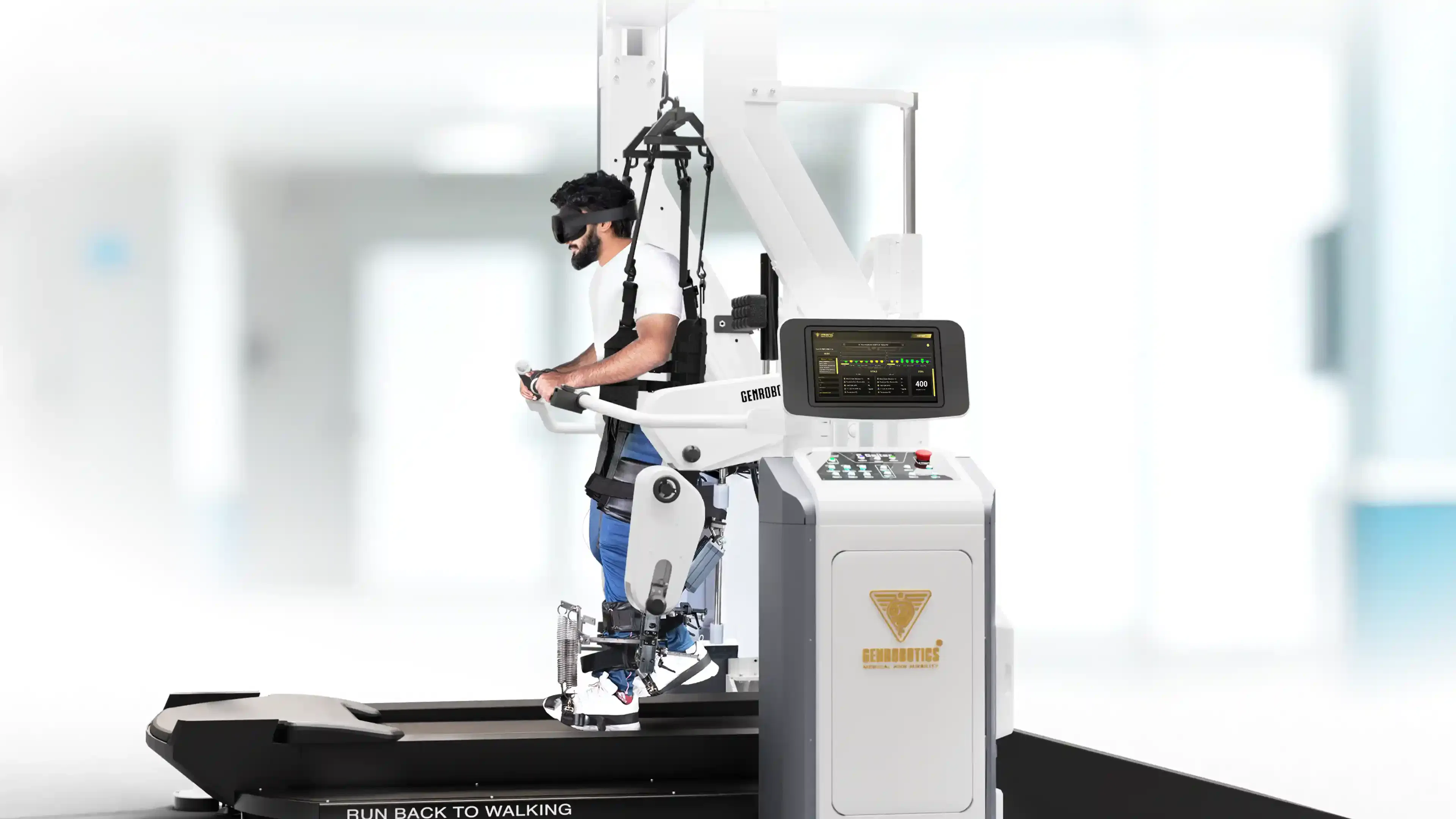
A rehabilitation robot is fundamentally designed to support repetitive, guided, measurable movement therapy.
That may sound simple. Clinically, it is transformative.
Neurological recovery often depends on repetition with precision. Patients recovering from stroke or spinal injury require consistent movement training over extended periods to stimulate neuroplasticity — the brain’s ability to reorganize neural pathways after damage.
Human therapists remain irreplaceable in this process. But rehabilitation delivery is physically demanding, time intensive, and difficult to scale across high patient volumes.
Robotic rehabilitation systems help address this bottleneck.
They can assist patients through structured movement cycles with measurable consistency, while simultaneously generating real-time performance data that supports more personalized therapy adjustments.
Yet the real significance lies elsewhere.
Rehabilitation robotics is not merely about replacing physical effort. It is about expanding therapeutic reach.
In overstretched healthcare systems, scalability becomes a clinical advantage.
A single therapist supported by robotic systems may be able to supervise more patients effectively without compromising therapy quality. Standardized movement assistance can reduce inconsistency between sessions. Digital monitoring can improve recovery tracking. Therapy intensity can increase without proportionally increasing workforce exhaustion.
In advanced rehabilitation centers globally, this shift is already visible.
But India’s opportunity may evolve differently from Western markets.
Japan built robotics leadership through industrial precision. India may build it through public-impact healthcare innovation.
Why India’s Rehabilitation Challenge Requires a Different Model
Imported healthcare models rarely scale effectively in India without localization.
This is especially true in rehabilitation robotics.
Most advanced rehabilitation systems developed for high-income healthcare environments are expensive, infrastructure-heavy, and optimized for specialist-driven clinical ecosystems. India operates under very different realities:
- high patient density
- constrained public healthcare budgets
- uneven digital infrastructure
- rural accessibility gaps
- long-distance care dependency
- multilingual patient populations
- workforce shortages
Which means India cannot simply replicate global rehabilitation systems. It must redesign them for its own public-health conditions.
This is where India’s broader deep-tech ecosystem becomes strategically important.
Over the last decade, the country demonstrated something globally significant through digital public infrastructure. Systems like Unique Identification Authority of India’s Aadhaar ecosystem and the National Payments Corporation of India-driven UPI framework showed that India can build scalable, population-level technology systems optimized for affordability and accessibility rather than elite exclusivity.
That same philosophy could shape the future of medical robotics in India.
Instead of pursuing only premium hospital automation, India has an opportunity to build rehabilitation technologies designed specifically for high-volume, public-health deployment.
And that changes the strategic conversation entirely.
Rural Healthcare Is Where the Stakes Become Real
In metropolitan hospitals, robotic rehabilitation may initially appear as an efficiency upgrade.
In rural India, it could become an access multiplier.
The distinction matters.
Large portions of India’s population still live far from advanced rehabilitation facilities. For neurological patients, repeated long-distance travel is not merely inconvenient — it is often medically and financially unsustainable.
A stroke survivor may require months of structured rehabilitation. Missing therapy continuity can significantly affect recovery outcomes.
This is where hybrid rehabilitation models could reshape care delivery.
Imagine district rehabilitation centers equipped with robotic physiotherapy systems connected to urban specialists through telemedicine infrastructure. Therapy sessions could be locally supervised while neurological experts remotely monitor progress data, recovery metrics, and therapy adjustments.
Suddenly, geography becomes less restrictive.
This is not theoretical speculation anymore. The convergence between AI-assisted healthcare, remote diagnostics, IoT-enabled medical devices, and rehabilitation robotics is already accelerating globally.
But India’s larger advantage may emerge from necessity-driven innovation.
Historically, some of the country’s most scalable innovations did not emerge from abundance. They emerged from pressure: limited resources, large populations, and urgent public need.
Healthcare robotics may follow the same path.
Beyond Automation: The Human Dimension of Rehabilitation Robotics
One of the biggest misconceptions surrounding robotics in healthcare is that machines reduce human care.
In reality, the opposite can happen when systems are designed responsibly.
Rehabilitation is deeply emotional work.
Patients recovering from paralysis, neurological trauma, or mobility loss are not simply rebuilding muscle strength. They are rebuilding confidence, autonomy, and identity.
Anyone who has worked inside rehabilitation environments understands this reality quickly. Progress is often slow. Recovery can feel psychologically exhausting. Therapists themselves face immense physical and emotional demands.
Robotic systems, when properly integrated, can reduce repetitive physical strain on therapists while allowing them to focus more deeply on patient strategy, motivation, personalization, and emotional engagement.
That distinction is critical.
The future of healthcare robotics will not be defined by removing humans from care delivery. It will be defined by augmenting human capability where healthcare systems are overstretched.
This is where the conversation becomes more important than efficiency metrics.
Because equitable healthcare is not only about treatment access. It is also about preserving dignity within care systems.
The Economic Argument Is Larger Than Hospitals
Healthcare conversations often underestimate the long-term economic impact of rehabilitation.
Disability-related productivity loss creates ripple effects across families, labor systems, and national economic output.
A patient who regains functional independence through effective rehabilitation is not merely a successful clinical outcome. That recovery can influence household income stability, caregiver burden, workforce participation, and long-term healthcare expenditure.
For governments facing rising chronic disease burdens and aging populations, rehabilitation infrastructure increasingly becomes an economic resilience issue.
Robotic rehabilitation may contribute to this shift in several ways:
Reducing Long-Term Disability Dependency
Improved therapy consistency can help patients recover mobility faster and more effectively, reducing prolonged dependency on family and healthcare systems.
Expanding Clinical Capacity Without Linear Workforce Expansion
India faces major shortages in specialized rehabilitation professionals. Robotics-assisted systems may help optimize therapist productivity while improving therapy continuity.
Encouraging Domestic Medical Robotics Manufacturing
As India pushes deeper into advanced manufacturing and deep-tech innovation, rehabilitation robotics could become a significant indigenous innovation sector.
The implications extend beyond healthcare delivery. They touch industrial policy, semiconductor ecosystems, embedded systems engineering, AI healthcare applications, and medical device manufacturing.
In other words, rehabilitation robotics is not only a healthcare story. It is also an innovation-economy story.
The Risk India Must Avoid: Elite Healthcare Robotics
Despite the optimism, an uncomfortable reality remains.
Advanced healthcare technologies often arrive first in premium urban institutions, benefiting populations that already possess relatively better healthcare access.
Without policy intervention, rehabilitation robotics could easily follow the same trajectory.
That would be a strategic failure.
If advanced rehabilitation remains concentrated only in elite hospitals, technology may inadvertently widen healthcare inequality rather than reduce it.
Several barriers still threaten inclusive deployment:
- high capital costs
- infrastructure limitations
- unreliable power and connectivity
- lack of trained operators
- limited reimbursement frameworks
- urban-centric healthcare investment
- insufficient public rehabilitation funding
And unlike consumer technologies, healthcare systems cannot scale meaningfully without trust, training, regulatory clarity, and long-term maintenance ecosystems.
This is why deployment strategy matters as much as innovation itself.
The countries that lead in healthcare robotics over the next two decades may not necessarily be the ones with the most advanced prototypes. They may be the ones that solve scalable implementation.
Why Public Policy Will Determine the Future of Rehabilitation Robotics
No country achieves healthcare equity through market forces alone.
Public systems matter.
For robotic rehabilitation to create meaningful nationwide impact, India will likely require coordinated alignment across healthcare policy, research institutions, startups, medical colleges, insurers, and public infrastructure programs.
Several interventions could prove decisive:
- public investment in rehabilitation infrastructure
- inclusion under government healthcare schemes
- incentives for affordable indigenous robotics manufacturing
- district-level rehabilitation modernization programs
- therapist and biomedical technician training ecosystems
- AI-enabled tele-rehabilitation frameworks
- public-private deployment partnerships
But the larger policy shift is philosophical.
India must stop viewing rehabilitation as a secondary healthcare layer.
As longevity increases and neurological disorders rise globally, rehabilitation will become central to healthcare sustainability itself.
Countries that recognize this early may fundamentally reshape long-term public health outcomes.
India’s Opportunity Is Not to Copy the Global Robotics Industry
The global robotics conversation has traditionally centered around industrial automation, manufacturing productivity, and defense systems.
India’s defining contribution could emerge elsewhere.
Affordable public-impact robotics.
That possibility is strategically significant.
A country capable of building scalable digital identity systems, low-cost space missions, and real-time public payment infrastructure may also be capable of building accessible healthcare robotics ecosystems designed for population-scale deployment.
And unlike many advanced economies facing demographic contraction, India still possesses a large engineering talent base, expanding startup ecosystems, and rapidly evolving digital infrastructure.
The ingredients exist.
The question is whether healthcare robotics will be treated merely as a premium technology vertical or as a national capability tied to public welfare and inclusive growth.
Because the future of rehabilitation may ultimately depend less on machines themselves and more on the values embedded into their deployment.
The Future of Healthcare Equity May Depend on Rehabilitation Access
The next era of healthcare transformation will not be judged only by how many lives medicine can save.
It will increasingly be judged by how well societies help people recover, regain independence, and return to meaningful life after illness or injury.
That shift changes everything.
Robotic rehabilitation alone will not solve India’s healthcare inequality. No technology can independently repair structural disparities rooted in infrastructure, economics, and access.
But under the right policy architecture, rehabilitation robotics could become one of the most powerful healthcare equalizers India has seen in decades.
Not because machines replace doctors.
Not because automation eliminates human care.
But because scalable rehabilitation systems can bring continuity, precision, and long-term recovery support to populations historically excluded from advanced care infrastructure.
And that may ultimately become the defining story of medical robotics in India.
Not futuristic hospitals.
Not technological spectacle.
But something far more important:
The possibility that advanced healthcare recovery should no longer depend on where a patient lives, what they earn, or how far they are from a major city.
FAQ
What is robotic rehabilitation?
Robotic rehabilitation uses advanced robotic systems to assist patients in recovering movement and physical function after injury or illness.
How can a rehabilitation robot improve healthcare access?
It can increase therapy availability, reduce therapist workload, and help deliver consistent rehabilitation services across more locations.
Can medical robotics benefit rural India?
Yes. Medical robotics can support rehabilitation services in regions with limited access to specialized healthcare professionals.
What are the challenges of robotic rehabilitation in India?
Major challenges include high costs, infrastructure limitations, training gaps, and unequal access between urban and rural areas.
Can robotic rehabilitation improve healthcare equity?
Yes. With proper policy support and affordable deployment, robotic rehabilitation can help reduce disparities in rehabilitation access and quality.