The Rise of Medical Robotics and Rehabilitation Robotics: Supporting Patients with Limited Mobility
Recovery after a serious injury or neurological condition is rarely dramatic. It is a gradual process that requires patience, consistency, and structured therapy.
Introduction: How Robotics Is Transforming Mobility Rehabilitation
Recovery after a serious injury or neurological condition is rarely dramatic. It is a gradual process that requires patience, consistency, and structured therapy.
Inside rehabilitation centers, therapists guide patients through repetitive movements designed to rebuild strength, coordination, and confidence. However, as the demand for mobility recovery grows worldwide, traditional therapy methods alone are often not enough to meet the need.
This is where medical robotics and rehabilitation robotics are beginning to transform modern healthcare. These advanced systems assist therapists, provide structured therapy movements, and help patients regain independence more effectively.
For organizations working at the intersection of engineering and healthcare, innovation in medical robotics represents more than technological advancement. It represents a new way to support human recovery.
What Are Medical Robotics and Rehabilitation Robotics?
Medical robotics refers to robotic technologies designed to assist medical procedures, treatment, and patient care.
Rehabilitation robotics specifically focuses on helping patients restore mobility and motor function after injury or illness.
These systems combine:
- Artificial intelligence
- Biomechanics
- Advanced sensors
- Real-time feedback technologies
Together, they create intelligent therapy environments where movement can be guided, measured, and improved over time.
Rather than replacing therapists, rehabilitation robotics enhances their capabilities by delivering consistent therapy support during repetitive exercises.
Why Mobility Rehabilitation Is Becoming More Important
Mobility challenges affect millions of patients globally. In rehabilitation environments, these challenges often arise from neurological injuries or long-term movement disorders.
Common conditions that require rehabilitation therapy include:
- Stroke
- Spinal cord injuries
- Traumatic brain injuries
- Parkinson’s disease
- Cerebral palsy
- Musculoskeletal disorders
- Age-related mobility decline
Traditional physiotherapy remains a critical part of recovery. Therapists guide patients through carefully designed exercises that help muscles regain strength while the nervous system relearns coordination.
However, rehabilitation therapy can be physically demanding and difficult to scale. Therapists often repeat the same movement patterns hundreds of times during a single session, while each patient requires personalized attention.
This is where rehabilitation robotics becomes a powerful partner in the recovery process.
How Rehabilitation Robotics Supports Patient Recovery
Rehabilitation robots deliver controlled, repeatable, and measurable therapy movements.
By integrating biomechanics, AI, and motion sensors, these systems provide structured support that enhances therapy sessions.
Key benefits of rehabilitation robotics include:
- Consistent and precise therapy movements
- Real-time tracking of patient progress
- Data-driven therapy adjustments
- Reduced physical strain on therapists
- Structured rehabilitation programs
Because every movement can be recorded and analyzed, therapy becomes more measurable and personalized.
This combination of human expertise and robotic precision is a defining trend in next-generation robotics for industry and healthcare.
Human–Robot Collaboration in Rehabilitation
One of the most important developments in modern rehabilitation systems is human–machine collaboration.
Rehabilitation robots are designed to work alongside therapists rather than independently.
In practice, this means:
- Therapists supervise and adjust therapy parameters.
- Robots guide controlled movements.
- Sensors monitor posture, balance, and gait.
- Data systems track patient progress.
This collaboration creates a therapy environment that is both structured and adaptable.
For patients, the result is therapy that feels supportive, motivating, and scientifically guided.
Example of Rehabilitation Robotics in Practice: The G-Gaiter System
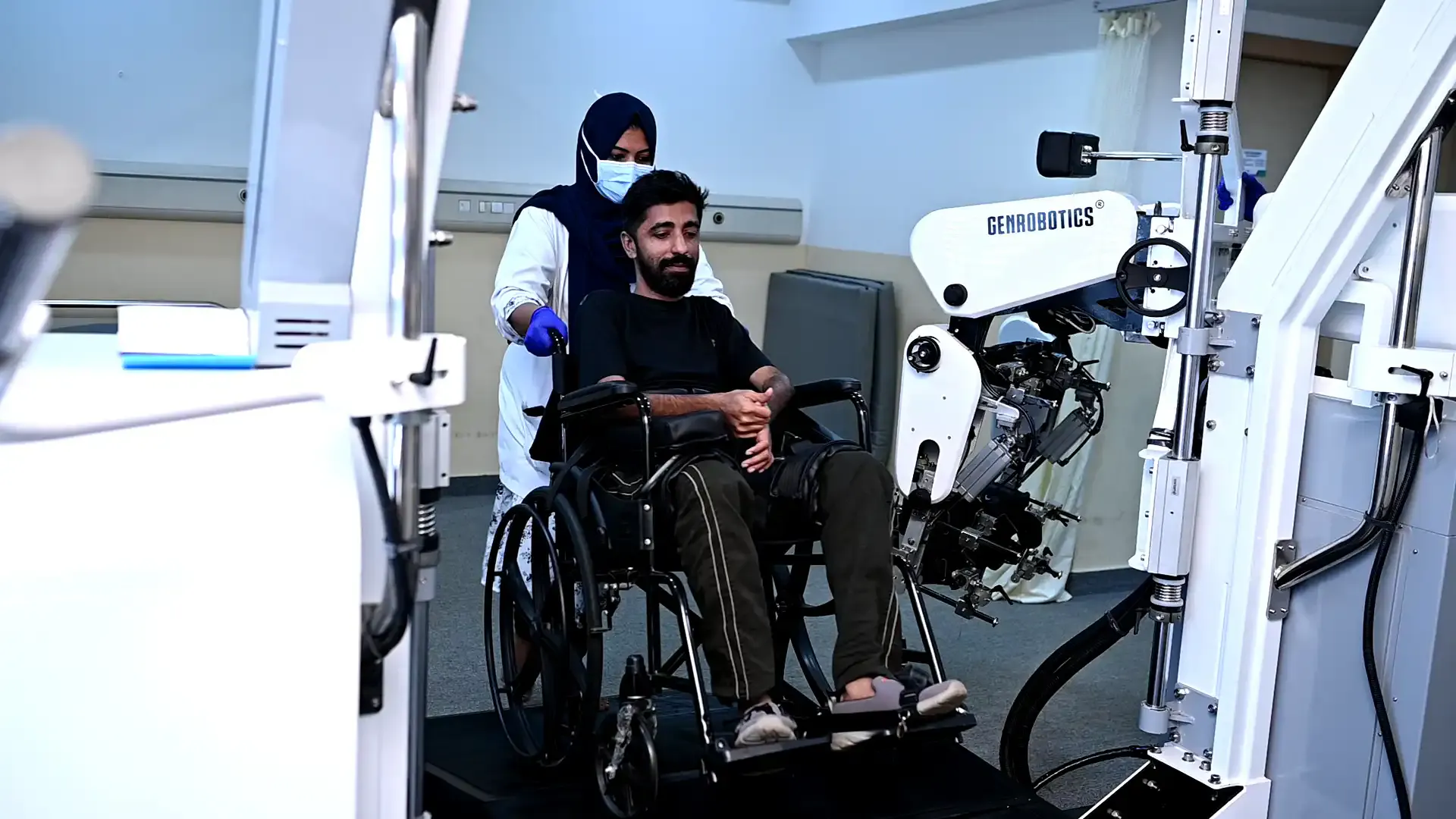
One example of modern rehabilitation robotics is the G-Gaiter system developed by Genrobotics.
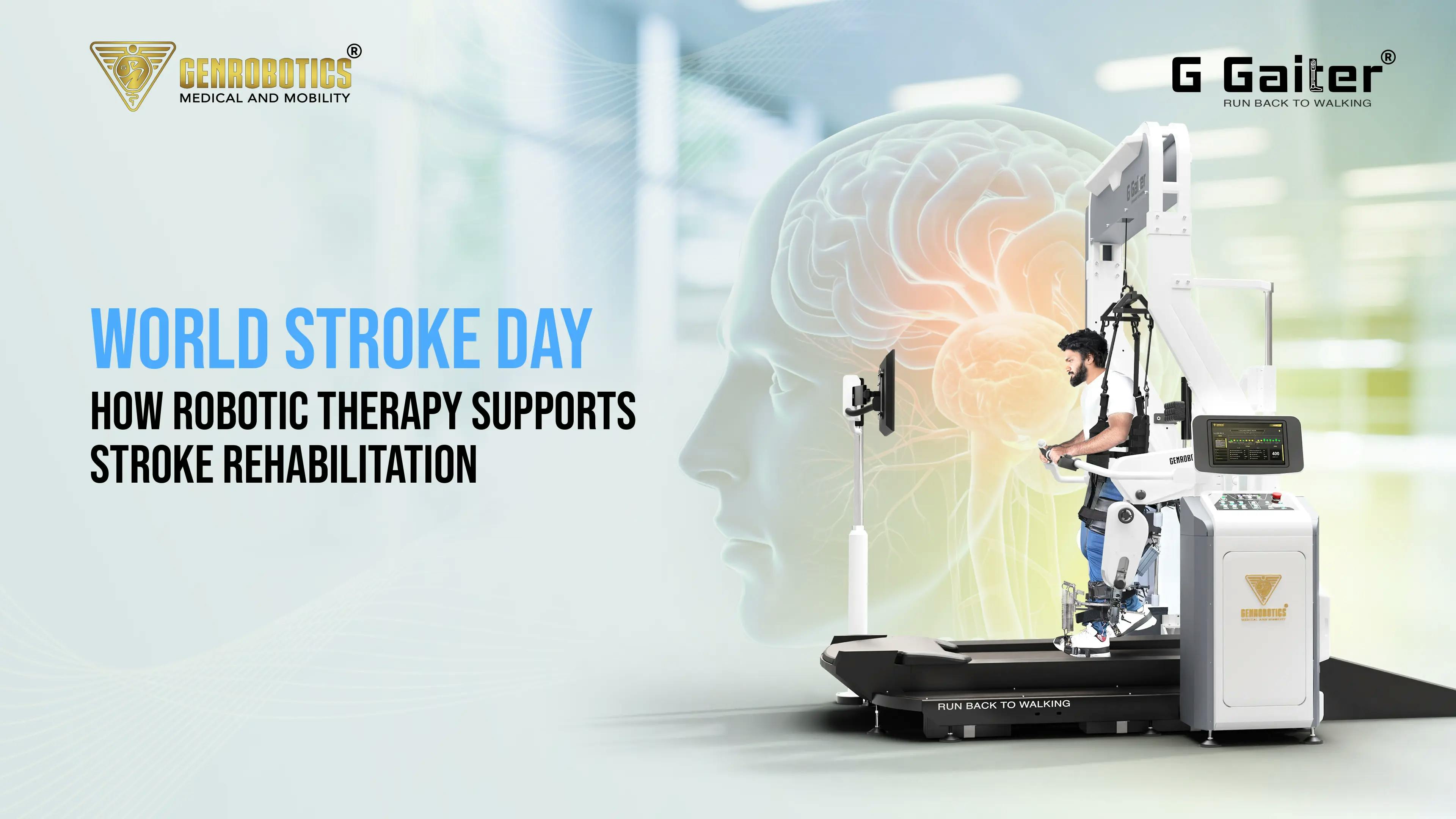
The system assists patients who are learning to walk again after neurological injuries such as stroke.
How robotic gait rehabilitation works
When a patient begins therapy:
- The patient is supported in an upright walking position.
- The robotic system provides controlled gait assistance.
- Sensors monitor posture, balance, and movement patterns.
- Therapists adjust therapy parameters based on patient progress.
Over time, assisted movements help the body relearn natural walking patterns.
Muscles strengthen. Neural pathways reconnect. Confidence gradually returns.
In this way, rehabilitation robotics becomes a quiet but powerful partner in the recovery journey.
Benefits of Rehabilitation Robotics for Therapists
Rehabilitation robotics does not replace clinical expertise. Instead, it enhances how therapy teams operate.
Therapists benefit in several important ways:
- Reduced physical strain during repetitive therapy sessions
- Real-time digital tracking of patient progress
- Higher precision and consistency in therapy delivery
- Ability to support more patients in structured rehabilitation programs
With robotic assistance managing repetitive movement tasks, clinicians can focus more on treatment planning and patient engagement.
Psychological Benefits for Patients
Mobility recovery is not only physical. It is also psychological.
Many patients recovering from neurological injuries feel uncertain about their ability to move safely. Fear of falling or failing can slow progress.
Robotic rehabilitation systems help reduce that uncertainty.
They provide:
- Guided motion support
- Stability during therapy
- Real-time feedback on movement
This structured environment helps patients feel safer during therapy sessions.
Confidence becomes an important part of recovery. When patients feel supported, they are more willing to continue therapy and push toward improvement.
Why Rehabilitation Robotics Is Especially Important in India
India’s healthcare system faces several structural challenges when it comes to long-term rehabilitation care.
Key challenges include:
- Rising numbers of stroke survivors and neurological patients
- Rapidly growing elderly population
- Shortage of specialized rehabilitation therapists
- Limited access to advanced rehabilitation centers in smaller cities
- Increasing demand for long-term therapy programs
These challenges make next-generation robotics for industry and healthcare increasingly relevant.
Robotic rehabilitation systems allow therapy programs to be standardized and replicated across hospitals and rehabilitation centers.
This helps healthcare providers deliver consistent care at scale.
Technologies Powering Modern Rehabilitation Robotics
Rehabilitation systems are the result of decades of research across robotics, engineering, and healthcare.
Many technologies originally developed for industrial robotics are now being adapted for medical environments.
Core technologies behind innovation in medical robotics include:
- Artificial intelligence for movement analysis and therapy adaptation
- Advanced motion sensors for precise gait monitoring
- Biomechanical systems that replicate natural human movement
- Human-machine interfaces for intuitive therapy control
- Real-time safety and feedback systems
The convergence of these technologies makes modern rehabilitation systems more precise, adaptable, and effective than earlier solutions.
The Future of Medical Robotics in Healthcare
The future of medical robotics will likely extend beyond hospital therapy rooms.
Researchers and innovators are already exploring new directions for rehabilitation technology.
Potential future developments include:
- AI-driven personalized rehabilitation programs
- Virtual reality assisted therapy environments
- Home-based robotic rehabilitation systems
- Lightweight wearable exoskeletons for daily mobility
- Community rehabilitation centers equipped with robotic therapy technologies
These advancements suggest that rehabilitation robotics will play a central role in the future of healthcare.
Conclusion: Technology That Empowers Human Recovery
Medical robotics is transforming how rehabilitation care is delivered.
By combining robotics, artificial intelligence, and biomechanical engineering, rehabilitation systems are helping patients rebuild mobility with greater precision and consistency.
For patients, this means improved independence and confidence.
For clinicians, it means better tools to guide recovery.
For healthcare systems, it means the ability to deliver high-quality care at scale.
Ultimately, the most meaningful measure of innovation in medical robotics is not the complexity of the technology itself.
It is the number of lives that technology helps transform.
FAQ: Medical Robotics and Rehabilitation Robotics
What is rehabilitation robotics?
Rehabilitation robotics refers to robotic systems designed to help patients recover mobility and motor function after injury, surgery, or neurological conditions. These systems assist therapy exercises and provide structured movement support.
How do medical robots help patients walk again?
Medical robotic systems guide patients through controlled walking movements while monitoring posture, balance, and gait patterns. This repetitive and structured movement helps retrain muscles and neural pathways involved in walking.
Do rehabilitation robots replace physiotherapists?
No. Rehabilitation robots work alongside therapists. They assist with repetitive movements and provide data insights, while therapists supervise treatment plans and patient progress.
What conditions benefit from rehabilitation robotics?
Rehabilitation robotics can support patients recovering from stroke, spinal cord injuries, traumatic brain injuries, Parkinson’s disease, cerebral palsy, and other mobility-related conditions.
Why is rehabilitation robotics important for the future of healthcare?
Rehabilitation robotics enables scalable, consistent therapy programs. This helps healthcare systems support growing numbers of patients who require long-term mobility rehabilitation.