7.5 Million Robotic Steps Delivered: How Rehabilitation Robotic Exoskeletons Are Transforming Recovery
When we look back at the journey to 7.5 million robotic steps, it does not feel like a number we set out to achieve. It feels like something that slowly took shape over time. It began in quiet therapy rooms.
When we look back at the journey to 7.5 million robotic steps, it does not feel like a number we set out to achieve. It feels like something that slowly took shape over time.
It began in quiet therapy rooms.
A patient trying to lift their foot. A therapist watching every movement. A machine stepping in, not to replace, but to assist.
None of these moments felt extraordinary on their own. But together, they built something meaningful.
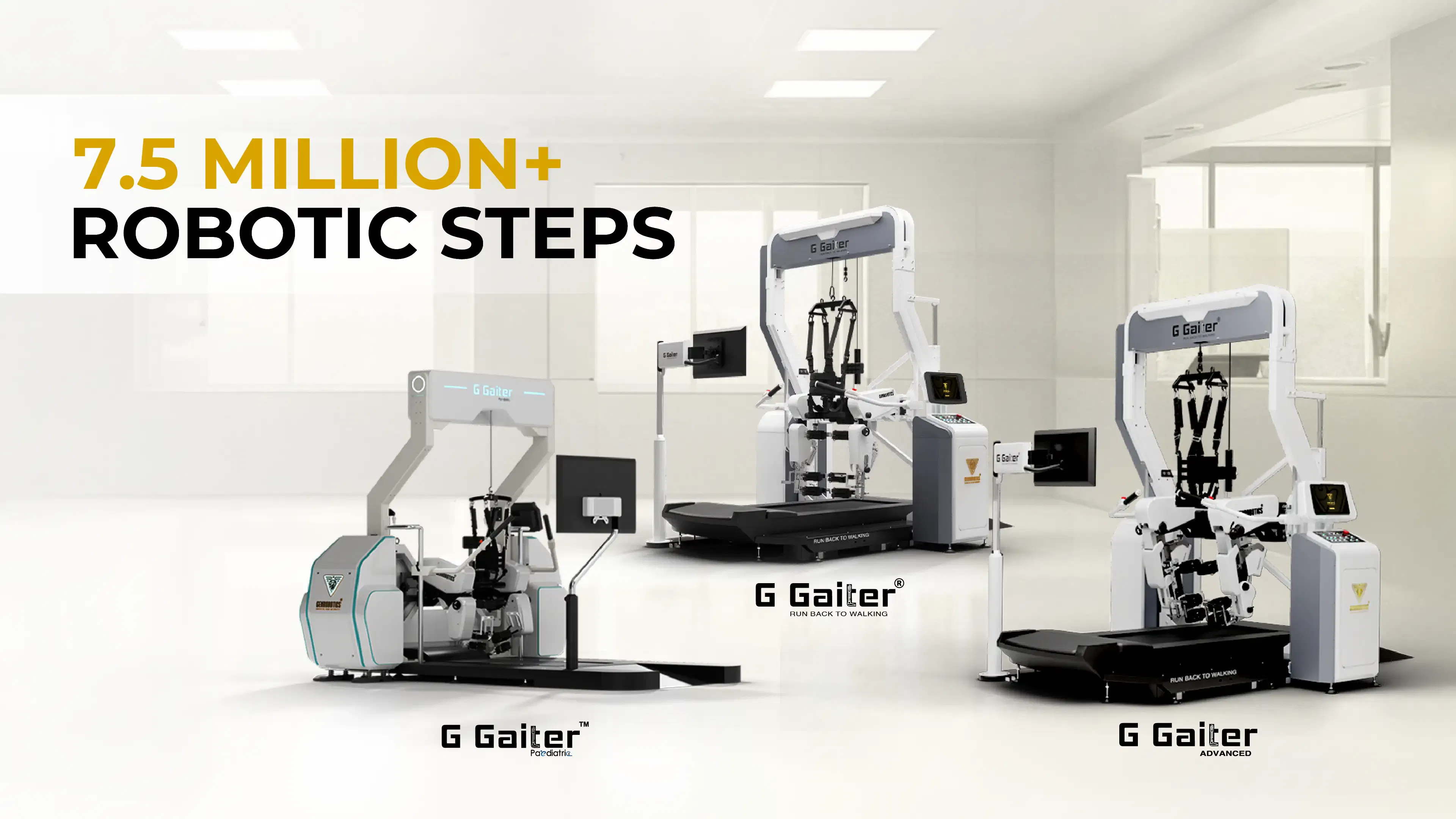
7.5 million steps.
That number carries more than scale. It carries effort, patience, and progress that unfolded one session at a time.
In rehabilitation, progress is not measured in distance. It is measured in control, balance, and confidence. For patients recovering from spinal cord injuries, strokes, or neurological conditions, walking is not something that simply returns. It has to be rebuilt.
We have seen how difficult that process can be. The hesitation in the first attempt. The uncertainty in movement. The physical and emotional effort that comes with each session.
This is where the rehabilitation robotic exoskeleton becomes part of the story.
At first glance, it looks mechanical. Structured. Almost distant. But once therapy begins, it takes on a different role.
It supports. It guides. It repeats what the body is trying to relearn.
Over time, it becomes something patients and therapists begin to trust.
A steady presence in an uncertain journey.
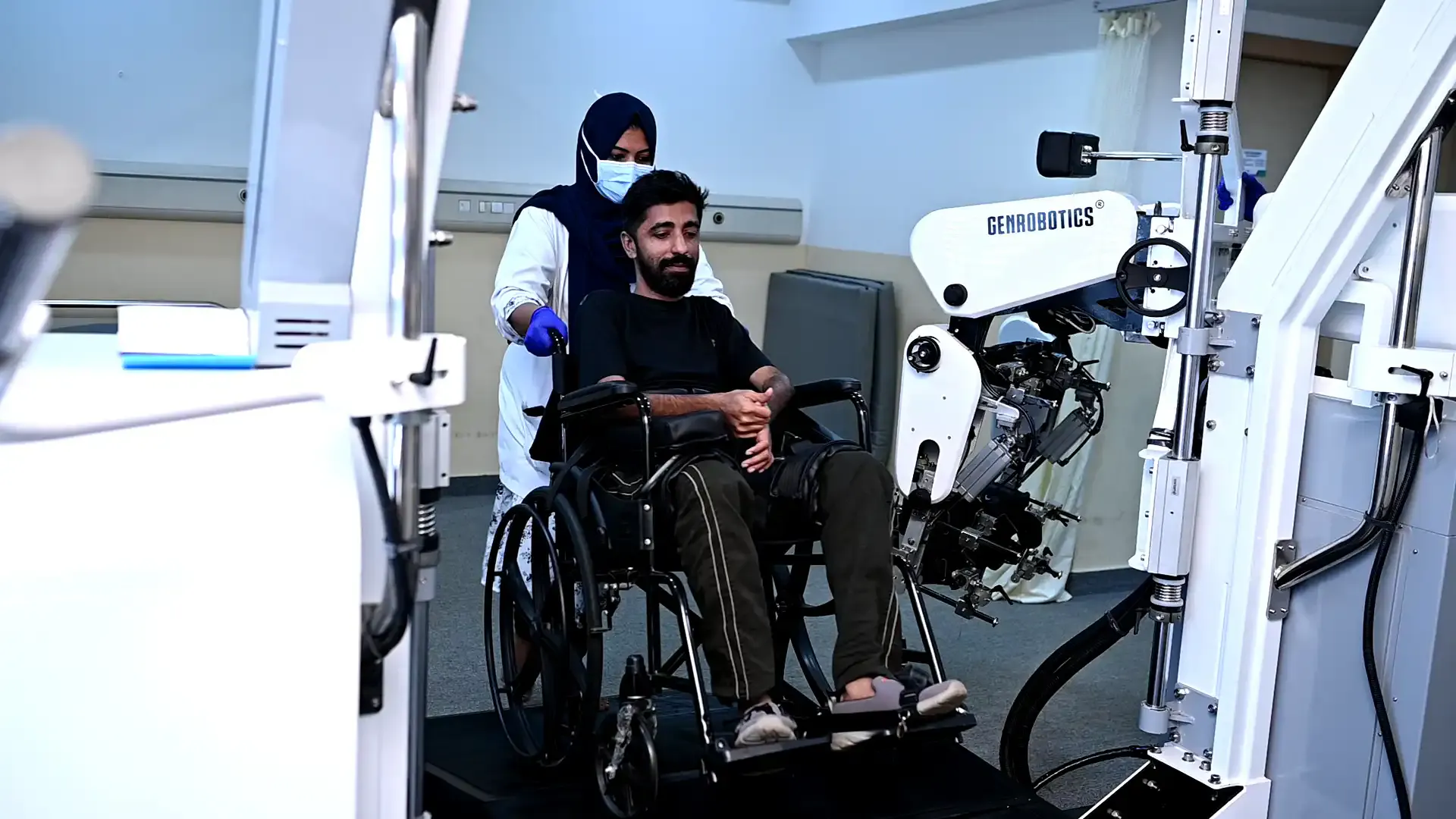
A rehabilitation robotic exoskeleton is designed to assist patients in performing controlled walking movements. It supports body weight, guides motion, and ensures that each step follows a consistent pattern. This consistency is not just technical. It is foundational to recovery.
Because in rehabilitation, repetition matters.
The brain and body reconnect through repeated movement. Every step reinforces a pathway. Every cycle teaches the body something it had forgotten.
But repetition is not easy to maintain manually. Therapists carry physical strain. Sessions can vary. Movements can lose consistency over time.
This is where technology makes a difference.
With systems like India’s first robotic gait trainer, therapy became more structured. Patients could take more steps in a single session. Movements remained consistent. Progress became easier to track.
It did not replace therapy. It strengthened it.
Therapists remained at the center of the process. They observed, adjusted, and guided. The system handled the repetition and precision that would otherwise be difficult to sustain.
Together, they created a balance.
Each robotic step is part of a carefully coordinated system. Sensors track posture and movement. Actuators guide the legs through walking cycles. Support systems reduce strain and improve stability. Feedback allows therapists to adjust the session in real time.
But when we think about 7.5 million robotic steps, we do not think about systems alone.
We think about what those steps represent.
They represent thousands of therapy sessions. They represent patients who showed up every day and tried again. They represent therapists who stayed patient through slow progress. They represent moments where something small changed and kept the journey moving forward.
Behind every number, there is a person.
We have seen patients who could not stand begin to experience supported walking. At first, it is uncertain. The movement feels unfamiliar. But with time, something shifts.
The hesitation becomes rhythm. The effort becomes controlled. The movement becomes repeatable.
Progress in rehabilitation rarely arrives suddenly. It builds quietly.
This is why the milestone matters.
Not because of the number itself, but because of what it holds within it.
There is often a question that comes up when people see these systems.
Do they replace therapists?
The answer has always been clear.
They do not.
Therapists remain essential. They understand the patient, adjust the therapy, and make decisions that no machine can replace. The system supports them by taking on the physical repetition and ensuring consistency.
It allows therapists to focus more on care and less on strain.
This shift is changing how rehabilitation is delivered.
Therapy is becoming more structured. More measurable. More consistent across sessions.
And most importantly, more sustainable for both patients and therapists.
As we look ahead, the journey does not feel complete. If anything, it feels like it is still unfolding.
There is room for systems that adapt to patient progress in real time. For therapy that becomes more personalized through data. For solutions that reach more people across different regions.
Each step forward will build on what has already been achieved.
But the essence will remain the same.
Rehabilitation is not about machines. It is about people.
It is about helping someone take a step they could not take before. It is about rebuilding movement in a way that feels possible again.
The 7.5 million robotic steps are not just a milestone.
They are a reflection of persistence.
Of effort repeated across days and months. Of trust between patient, therapist, and technology. Of a system that supports without taking over.
When we look at it that way, the meaning becomes simple.
Every step mattered.
And when those steps came together, they changed what recovery could look like.
FAQ
What is a rehabilitation robotic exoskeleton?
A rehabilitation robotic exoskeleton is a wearable device that helps patients perform controlled walking movements during physical therapy.
What is India’s first robotic gait trainer?
It is an advanced rehabilitation system designed to assist walking therapy through structured and repeatable movement patterns.
Why are robotic steps important in recovery?
Each robotic step helps rebuild neural pathways, improve coordination, and support mobility recovery.
How many steps are typically delivered in robotic therapy?
The number varies, but high-repetition therapy sessions can include hundreds to thousands of steps per patient.
Is robotic rehabilitation better than traditional therapy?
Robotic rehabilitation enhances traditional therapy by improving consistency, increasing repetitions, and providing measurable progress data.