
Gait Rehabilitation Using Advanced Robotic Gait Training
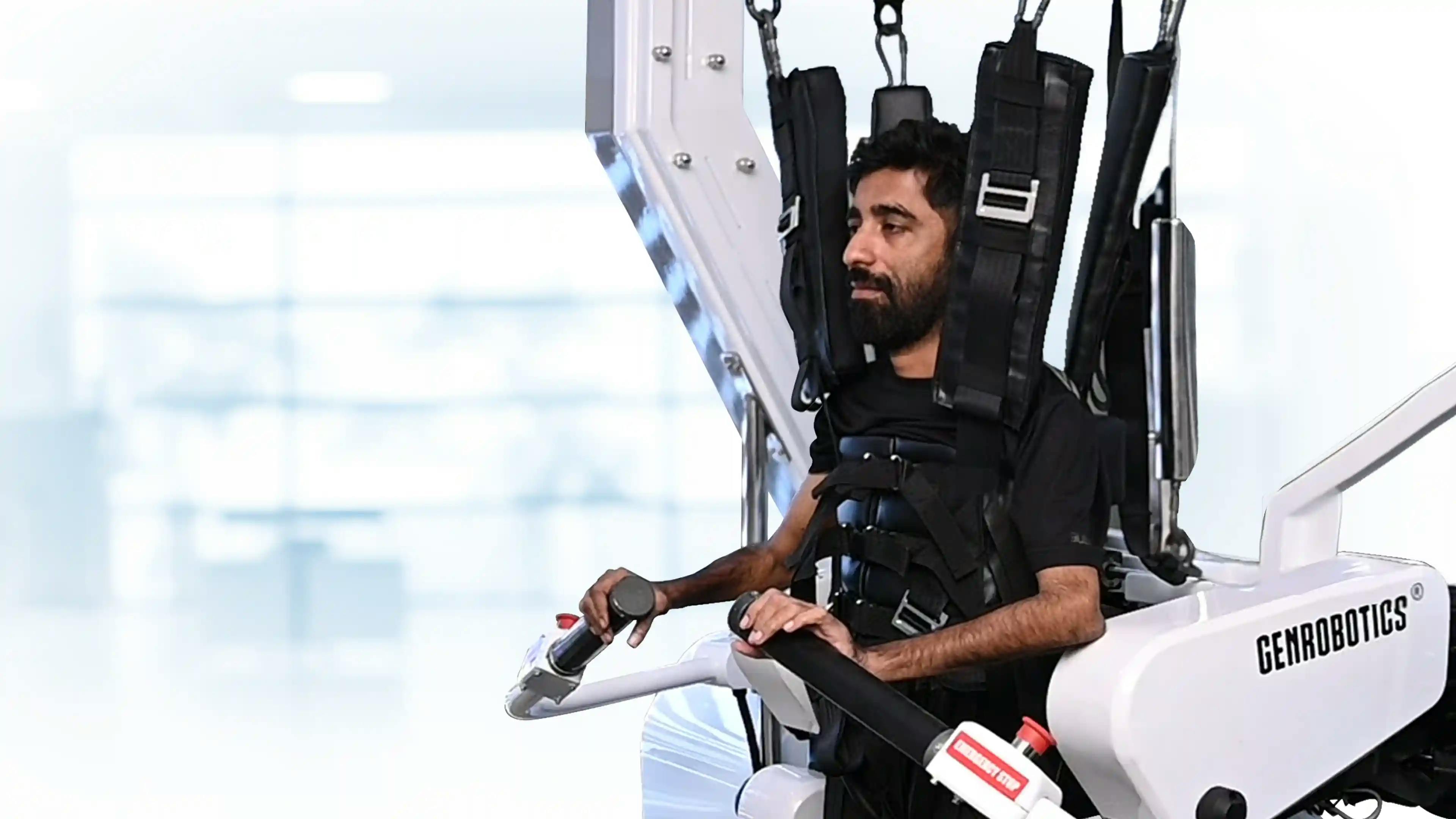
Arun, a young patient, suffered a severe accident in January 2024 and was admitted to the neurosurgery department at Calicut MIMS Hospital with zero mobility. The initial medical opinion suggested a rehabilitation duration of 7 to 8 months.
PROJECT BACKGROUND
Arun, a young patient, suffered a severe accident in January 2024 and was admitted to the neurosurgery department at Calicut MIMS Hospital with zero mobility. The initial medical opinion suggested a rehabilitation duration of 7 to 8 months.
Seeking a more supportive rehabilitation environment, Arun moved to the PMR Department at Aster Mother Hospital on January 17th. The PMR team predicted a shorter recovery window of about 4 to 5 months and began structured therapy focused on mobility restoration and confidence building.
PROJECT DETAILS
Duration of Rehabilitation:
January 2024 to April 2024
Technology Introduction:
Arun began robotic assisted gait training with the G Gaiter two months into his rehabilitation, after he regained the ability to sit up.
Daily Session Structure:
- Duration: 30 to 35 minutes
- Steps per session: Approximately 900
- Frequency: Daily sessions
IMPLEMENTATION AND OPERATION
Arun presented with gait imbalance, impaired coordination, and difficulty maintaining natural walking patterns. To address these issues, the PMR team integrated robotic gait training into his treatment plan.
Key features leveraged during therapy included:
- Controlled Step Repetition
Supported consistent movement cycles to reinforce motor relearning. - Accurate Gait Movements
Helped Arun relearn a natural walking pattern with balanced weight distribution. - Repetitive Gait Cycles
Allowed gradual increase in stability and leg coordination through repetitive gait cycles.
IMPACT AND OUTCOMES
Improved Gait Pattern
Arun achieved significant improvement in gait pattern and walking stability within two weeks of robotic-assisted sessions.
Faster Functional Recovery
He progressed from imbalance and coordination issues to steady walking within three months.
Enhanced Confidence and Independence
He was discharged walking independently without any external support.
Rehabilitation Accuracy
Consistent step cycles strengthened leg movement control and refined overall gait mechanics.
SUMMARY OF ACHIEVEMENTS
- Accelerated gait recovery compared to the initial prognosis
- Improved balance and coordination
- Enabled confidence-driven rehabilitation
- Demonstrated the impact of robotic gait training in PMR
- Reinforced the role of structured, repetitive gait cycles in motor relearning
CONCLUSION
Arun’s rehabilitation journey highlights the strong impact of advanced robotic gait training in modern PMR practice. The G Gaiter played a key role in refining his walking pattern, enhancing leg movement control, and giving him the confidence to walk independently again. His journey stands as a clear example of how structured PMR, supported by advanced robotic technology, empowers patients to walk back into their lives with renewed hope and strength.